Parking for growing fleets: new mobility models in 2026
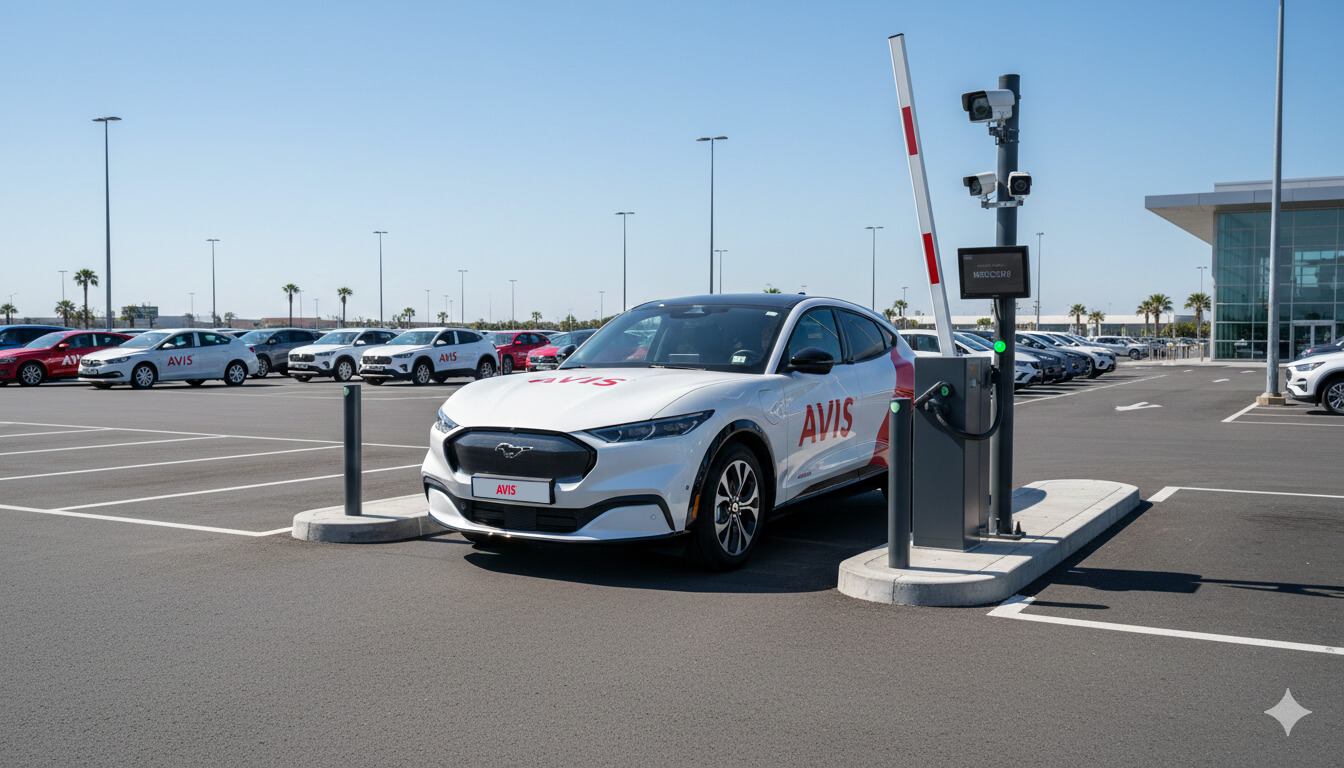
Parking has become a strategic issue for large companies - it's not "just" about the number of spaces in front of the building. Fleet growth, regulation in cities, pressure for electrification and lack of space are changing the rules of the game. In this article, we show practical solution models on how to set up a corporate parking and mobility policy and how to look at parking also through investment decision making (CAPEX vs. OPEX). Finally, you will find a checklist, FAQs and recommendations on how to incorporate flexible mobility into your strategy.
Why fleet parking is the "new infrastructure"
As a fleet grows, parking starts to act like critical infrastructure - just like IT, energy or logistics. In practice, it's a combination of four pressures:
- More cars on the road and in cities → more competition for space.
- Changes in working patterns (hybrid, shifts, client visits) → parking has peaks, not averages.
- Regulated parking and zones → company cars (and visitors) bump up against rules, time limits and prices.
- Electrification of fleets → parking is no longer just "standing still" but also charging, power, cables, metering, contracts and data standards.
Data at a glance (EU + Slovakia)
- EU: There are approximately 290 million vehicles on European roads, of which ~6 million are zero-emission. Corporate registrations account for ~60% of new passenger car registrations in the EU - so companies are really "pulling" the market.
- EU: Motorisation rate is around 571 passenger cars per 1,000 inhabitants (2023); the number of passenger cars in the EU was over 259 million in 2024.
- Slovakia: the total number of light vehicles (M1 + N1) was 3,045,906 in 2024. Alternatively powered light vehicles accounted for ~2.73% (as of the December 2025 update).
- Slovakia - Charging: As of 31.12.2024, 2 424 public charging points have been installed at 967 locations (+34% YoY); total installed capacity exceeds 125 MW.
Key idea: with fleets, it does not pay to deal with parking "site by site", but as a system - people + cars + energy + data + rules.
What "parking for growing fleets" means in 2026
In 2026, the definition of "good" parking is changing. It's no longer just availability, but especially:
- Predictability (reservations, rules, reporting)
- Sharing capacity (pool vehicles, shared parking, time windows)
- Digitisation (ANPR/arm, apps, automatic permits)
- Energy readiness (charging points, smart charging, power capacity)
- Regulatory and standards compliance (e.g. interoperability requirements and data obligations for public chargers)
Practical hint: If you're addressing parking today only over the number of spaces, it's similar to planning for internet only over the number of cables - without bandwidth, security and management.
6 parking and mobility models for large companies (comparison of solutions)
Below are the most common models that companies combine. The point is that a single model rarely covers everything - the goal is to compose the solution as a "mix".
1) Self-parking on site (simplest, but limited)
When it makes sense: stable location, cheap land, lower visitor requirements.
- Pluses: control, ease of operation, lowest complexity.
- Minuses: fleet growth quickly hits limits; poor scalability.
- Tips:
- Implement a "peak occupancy" KPI (how many cars are standing at peak times)
- set time slots (e.g. for service deliveries, visits)
- make parking a "managed resource": permits, rules, reporting
2) Parking house / underground garages (CAPEX-heavy infrastructure)
When it makes sense: long term site commitment, high cost of surrounding leases, need for security.
- Pluses: high capacity on small footprint, security, ready to charge.
- Minuses: high CAPEX, permitting, risk of future regulation/changes.
- Investment note: parking costs are often quoted in European sources in a wide range - from cheap surface parking to expensive underground solutions (see Sources at the end).
3) Renting parking spaces from developers/parking houses (OPEX, flexibility)
When it makes sense: growing fleet, uncertainty, need to scale quickly.
- Pluses: quick solution, risk transfer, scaling as needed.
- Minuses: rising prices in exposed locations; dependence on third parties.
- Tip: negotiate variable capacity (e.g., 70 fix + 30 "flex") and SLAs (security, 24/7 access, visits).
4) Shared parking and time windows
Idea: offices have peak daytime, residents evening; retail has peak weekend.
- Pluses: significantly better use of spaces without development.
- Minuses: need for agreements, rules and digital management.
- Key phrases: 'parking-as-a-service', 'shared capacity', 'time-based access'.
5) Corporate 'mobility hub' (parking + charging + micromobility)
Meaning: make parking a hub - car, van, e-bike, scooter, public transport, parcel machine.
- Pluses: reduces pressure on cars as only mode of transport; supports carpool.
- Cons: requires coordination with facility/HR, sometimes local government.
6) Flexible fleet instead of "parking surplus"
Many businesses address parking by having more cars than they realistically need (because "security"). However, this increases the demands on parking, insurance, servicing and internal logistics.
- Solution: combine own fleet with short and long term rentals according to season/projects.
- Benefit: fewer parked cars = less parking + better cashflow.
EV charging transforms parking: from space to power
When fleets switch to hybrids, PHEVs or BEVs, parking becomes an energy project - and a question of standards.
What's important in 2026 (specific dates)
- If you are planning publicly accessible charging in your parking lot (e.g., for visitors, clients, or shared fleets), expect that as of January 8, 2026, publicly accessible AC/DC charging points "installed or refurbished" must meet updated interoperability requirements, including EN ISO 15118-2:2016 (vehicle-to-grid communications).
- From 1 January 2027, a requirement for EN ISO 15118-20:2022 (2nd generation) will also be added for publicly accessible points. For plug-and-charge, compatibility with both standards is required.
These details have practical implications for technology selection (HW/SW), supplier contracts, vehicle compatibility and future extensions.
If a fleet is transitioning to hybrids, PHEVs or BEVs, parking becomes an energy project.
What changes in practice
- Instead of "how many spaces" you address "how many kW" (reserved power, distribution, switchgear).
- Interoperability standards (e.g. ISO 15118) and obligations around information and data also come into play with publicly accessible chargers.
- In some cases, depot charging (on-site charging) makes more sense than relying on the public grid.
- Capacity planning: even as public infrastructure grows, it is critical for fleets to have "power certainty" at the depot/area - especially if cars are parked at the same time (typically after returning from a shift).
- Instead of "how many spaces" address "how many kW" (reserved power, distribution, switchgear).
- Interoperability standards and obligations around information and data also come into play with publicly accessible chargers.
- In some cases, depot charging (on-site charging) makes more sense than relying on the public grid.
5 steps to plan for fleet charging
- Segment your vehicles (M1/N1, daily mileage, overnight vs. daytime parking).
- Map standing times (when a car is "parked and can charge").
- Suggest a mix of AC (longer standing) and DC/HPC (fast turning vehicles).
- Introduce load management (smart charging) to avoid paying unnecessarily high reserved power.
- Measure kWh per 100 km and charging costs by location (campus vs. public points).
Regulated parking in cities: what it means for company fleets
Today, large companies are faced with the fact that some employees and company vehicles park in regulated zones. This is particularly relevant in cities with expanding parking policies.
What we recommend to companies
- Corporate parking policy: who is entitled to a space, who is entitled to an allowance, who is entitled to a "mobility budget".
- Visitor policies: reserved spaces, digital permits, short slots.
- Park & Ride + last mile: where a car + public transport/bike combination makes sense.
- Monitoring and auditing: how much parking costs per year (not only in € per space, but also in lost time and logistics).
Example from Slovakia: the Bratislava PAAS parking system reports revenues of over €17.15 million for 2024, expenses for the implementation and operation of the regulation of over €8.7 million, revenues from the sale of parking cards of over €2.29 million, and over 57,400 fines issued (income from fines of over €3.3 million). For companies, this means that both "visitor parking" and "parking of business vehicles in the city" become a planned item, not an improvisation. For companies, this means that 'visitor parking' becomes a planned item, not an improvisation.
How to calculate parking needs: a quick model for CFO/Facility
To manage parking, you need a simple calculation. Try this framework:
Step 1: Find the peak (not the average)
- Employees at the location during peak hours (A)
- Percentage of commuters driving (B)
- Carpool factor (C) - average people per car (e.g., 1.1 to 1.5)
- Peak visits and service (D)
Estimate of places = (A × B / C) + D
Step 2: Establish 3 KPIs
- Peak occupancy (%) - peak occupancy
- Turnover (cars/site/day) - how many cars are dropped off at the site
- Cost per occupied hour (€) - how much does it cost per hour of actual occupied parking
Step 3: Compare the 3 scenarios
- Build (CAPEX): investment in the area or parking
- Lease (OPEX): rental of spaces + SLA
- Replace (Mobility): reducing the need for spaces through mobility budget, carpool, flexible fleet
Investment insight: CAPEX vs OPEX (and why it's not just "price per seat")
Parking is often an "invisible cost" - it's scattered in leases, construction, internal rules, and over time. With a growing fleet, it pays to do a CFO-friendly comparison:
Typical cost items
- land/land rent
- Construction (surface vs. multi-story vs. underground)
- maintenance, lighting, winter maintenance
- security (CCTV, access)
- Digitization (arms/ANPR, application, reporting)
- EV infrastructure (chargers, wiring, power)
How much does a parking space cost in practice (indicative frameworks)
Costs vary by location, geology and standard, but the following frameworks are often cited in European analyses:
- Surface space (on ground): approximately €3,000-5,000/space
- Car park / multi-storey solution: approximately €20,000 - 50,000 / site
- Underground parking: approx. 20,000-80,000 €/space
Note: For large companies, add digitalization and EV infrastructure (wiring, power, smart charging), which can significantly change the overall price.
Mini example for CFO (100 seats)
- If a company was faced with the decision to "build 100 sites" vs. "lease 100 sites", just at a construction cost of €20,000/site, the CAPEX is ~€2.0m (excluding land and charging).
- When leasing, the key is to compare the annual OPEX to how much the capital and risks (permitting, future regulation, spare capacity) cost.
- land / land lease
- Construction (surface vs. multi-story vs. underground)
- maintenance, lighting, winter maintenance
- security (CCTV, access)
- digitisation (arms/ANPR, application, reporting)
- EV infrastructure (chargers, wiring, power)
A rule of thumb for decision making
- If you can't guarantee you'll be on site for 5-10 years, be careful with large CAPEX.
- If you have seasonal fluctuations, prioritize OPEX and flexibility.
- If "excess fleet" is an issue, the cheapest investment is often mobility optimization (reducing the number of cars that are parked).
Trends 2026: where parking and mobility are going for large companies
- Smart parking and data: sensors, reservations, automatic permits, reporting.
- Curb management: cities will regulate more "curb space" (supply, pick-up/drop-off).
- EV-ready campuses: charging as standard, not a benefit.
- Mobility budget: mobility allowance instead of "company car for everyone".
- Flexible fleet: short-term rentals for projects, long-term rentals without large inputs.
How AVIS fits into the strategy: mobility without parking surpluses
AVIS in Slovakia covers needs from short-term rentals to long-term solutions - and it's the combination of products that helps businesses reduce the pressure on parking.
Where it makes sense for large companies
The products that are most commonly combined for parking and fleet (AVIS SK):
- AVIS short-term rental (operational crews, visits, short projects)
- AVIS MaxiRent / long-term lease (months, more flexible than traditional leasing)
- AVIS Lease / operating lease (predictable TCO for a stable core fleet)
- AVIS Van (deliveries for logistics, service, projects, seasonal peaks)
- Project reinforcements and seasonal: vehicles for 1-3 months without "forever" increasing your own fleet.
- Pool vehicles: internal car sharing (booking, scheduling) that reduces the need to keep cars "just in case".
- Long term solutions: operating lease / long term rental with service and insurances bundled (cost predictability).
Practical advantage: when you can add or remove cars quickly, you don't have to build parking "to the max" - just for real peak times.
Frequently Asked Questions (FAQ)
1) How many parking spaces does a company need per 100 employees?
Depends on car commute and carpool factor. It is best to calculate by peak: (peak employees × car share / average occupancy) + visits.
2) When is it worth building a parking structure?
Especially when you have long-term site stability, high rental rates for spaces in the area, and need a security or EV-ready solution. Otherwise, renting or shared capacity tends to be more efficient.
3) How will regulated parking affect business visits?
Without a process (reserved spaces, short slots, digital permits), visits will add time and stress. We recommend having a clear policy for guests and service.
4) How to prepare parking for electric mobility?
Start by segmenting vehicles, mapping parking times and designing an AC/DC mix. Power management (smart charging) and cost metering are key.
5) What is a mobility budget and why does it reduce the need for parking?
It is a mobility allowance (public transport, car sharing, taxi, bike) that reduces dependency on one's own car. When a proportion of people switch modes, the pressure on parking will decrease.
Summary / TL;DR
- Fleet parking is a strategic infrastructure (people + cars + energy + data) in 2026.
- A mix of models works best: own spaces + rent + shared parking + mobility hub.
- Electrification turns parking into an energy project (kW, power, smart charging).
- Use peak occupancy, turnover, and cost per occupied hour to make decisions.
- Flexible mobility (short/long term rentals) helps reduce "parking surplus".
Keywords and entities (used in the article)
Main KW: parking, infrastructure
Related KWs and phrases: corporate fleet, parking policy, parking house, parking rental, shared parking, smart parking, ANPR, mobility hub, mobility budget, carpooling, peak occupancy, turnover, cost per occupied hour, fleet electrification, EV charging, AC/DC chargers, depot charging, load management, interoperability, ISO 15118 standards
Entity.
Conclusion
Fleet growth doesn't automatically have to mean an increase in parking problems - if you stop looking at parking as a 'number of spaces' and start managing it as part of mobility and infrastructure. Set KPIs, combine solutions and let your fleet grow flexibly - without unnecessary parking investments.
Want to translate this to your specific case? Get in touch and we'll prepare a short analysis: peak capacity needed, a proposal for a mix of parking and mobility solutions, and a recommendation on how to set this up via AVIS products (short-term rental, long-term rental, operating lease, project delivery).
Sources and data notes (SK + foreign)
Note: We provide a selection of sources underlying the trends, examples and numerical frames in the article.
Slovakia/local:
- PAAS (Bratislava Parking Assistant) - information on parking regulation and zones
- TASR/Pravda, SME - reports on revenues and development of regulated parking in Bratislava
- SEVA (Slovak Electric Vehicle Association) - statistics on public charging points and capacity
- AVIS Slovakia: avis.sk (products and articles), avisvan.sk (deliveries), avismaxirent.sk (long-term rental), avislease.sk (operational leasing),
EU/foreign:
- European Commission - COM(2025) 96 final "Decarbonise Corporate Fleets" (data: ~290 million vehicles in the EU, ~6 million zero-emission; ~60% of car registrations are corporate)
- Eurostat - Key figures on European transport (2024 edition) and statistics on passenger car numbers and motorisation rates (e.g. 571 cars/1,000 inhabitants in the EU in 2023; 259+ million passenger cars in 2024)
- Eurostat News - "Passenger cars in the EU: 2 per 5 inhabitants" (2019-2024 development comparison)
- EUR-Lex - Regulation (EU) 2023/1804 (AFIR) + Commission Delegated Regulation (EU) 2025/656 (application from 8/1/2026; requirements for connectors and ISO 15118; from 1/1/2027 ISO 15118-20)
- ACEA - Reporting on charging infrastructure and network development needs (target frameworks to 2030)
- European Parking Association (EPA) - materials on parking data, trends and standardisation
- Housing Europe & European Cyclists' Federation (ECF) - background paper on parking economics and parking standards (indicative cost per space by type)
- EAFO (European Alternative Fuels Observatory) - country overviews and market indicators (Slovakia)
