Corporate delivery in 2026: pressure on pricing, availability and service
LCV 101: what is a "light commercial vehicle" and why it's important for a company
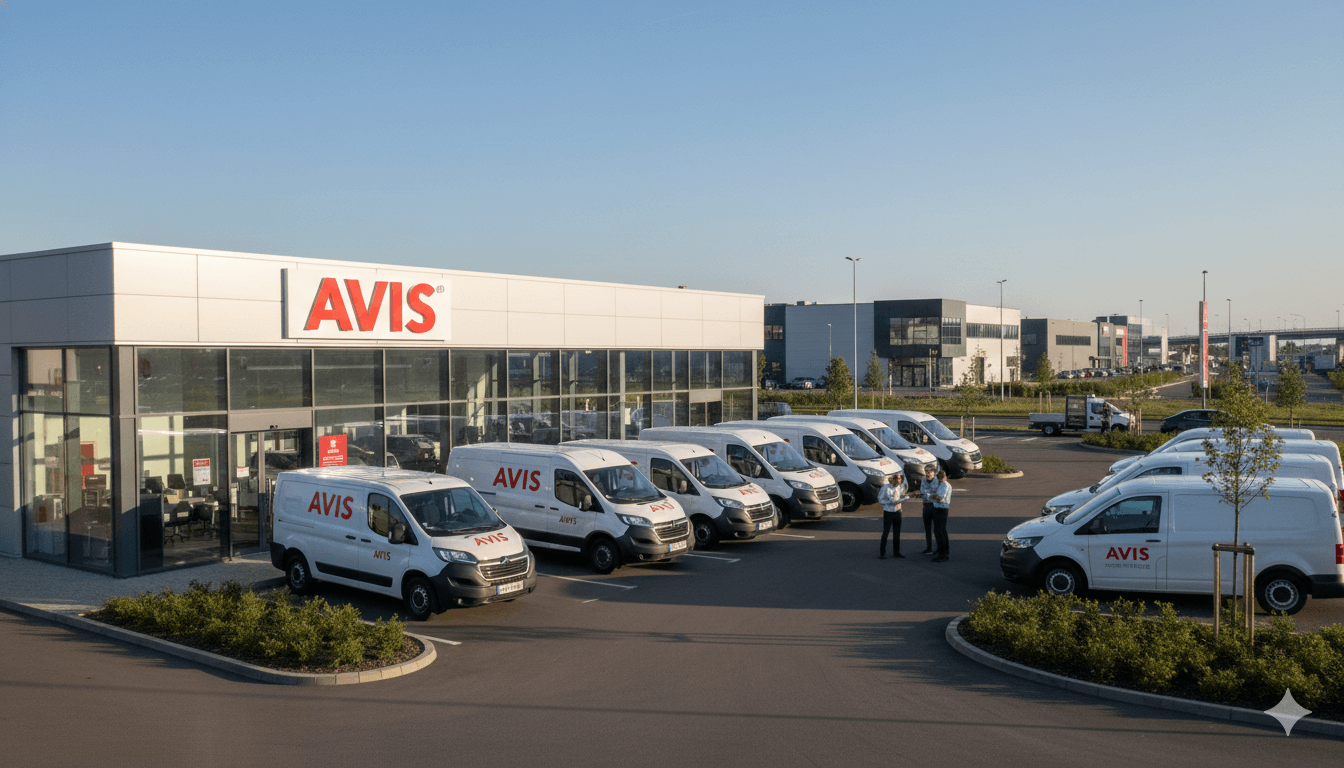
A LCV (light commercial vehicle) is simply a van or utility vehicle that businesses use to transport goods, tools, team or to provide field services. In practice, you will often come across the designations:
- N1 - commercial vehicles up to 3.5 t (typical vans for couriers, craftsmen, service teams)
- N2/N3 - higher weight categories (heavier trucks; in this article we will focus mainly on N1)
Why address this upfront? Because a van is often a "production tool" for a company. If the van is standing, it is standing:
- Delivery and sales,
- site/assembly work,
- service trips,
- reputation (SLA, delivery time, customer experience).
In 2026, it will be critical to manage delivery as an asset (TCO, availability, risk), not just as a "car" item.
Market and numbers: Slovakia vs. EU (what reality says)
Slovakia: LCVs are a smaller market, all the more sensitive to fluctuations
According to the European Alternative Fuels Observatory (EAFO), 9,061 new light commercial vehicles (LCVs) will be registered in Slovakia in 2024 (N1), with a slight year-on-year decline. See the same source for total new vehicle registrations and market development context.
Interpretation for practice (SME/logistics): a smaller market means that at peak times (season, major projects, production gaps, fleet turnover surges) the availability of a particular configuration can change quickly - and with it prices.
EU: registrations fluctuate and companies are more cautious
ACEA reports that van registrations in the EU were down year-on-year (vans -8.2%) in the first nine months of 2025. This is particularly important for Slovakia and the CEE region, where many vans are purchased through European channels and availability depends on production schedules and allocations.
Why LCVs will be under pressure in 2026: three main "levers"
1) Pricing pressure: it's not just about the list price, it's about TCO
In 2024-2026, it turns out that the decisive factor is not "how much a van costs", but how much a van costs per month of operation (TCO - total cost of ownership).
Typical components of TCO (often decisive in company practice):
- Acquisition/financing (CAPEX or monthly cost),
- insurance and claims,
- servicing, tyres, minor repairs,
- administration (fleet management, replacement vehicles, claims handling),
- Downtime (unbilled hours, undelivered shipments, SLA penalties),
- fuel/energy (especially with high annual mileage).
Trend 2026: even with a stable purchase price, pressure is increasing through service items and parts availability (time = money).
2) Availability: "can be bought" ≠ "can be delivered on time"
Even if the market supply gradually stabilizes, availability is key for companies:
- specific length and height (L2H2/L3H2),
- gearboxes (AT/MT),
- equipment (towing, shelving, 3-seater cab, refrigeration),
- delivery date (project, season, new contract).
Practical implications: if you need 2-10 deliveries "at once", long lead times may mean it pays to have a flexible part of the fleet via rental (monthly/medium term) until purchase or lease is completed.
3) Service: whoever can handle service and replacement wins
Servicing in 2026 is not just about the cost of labour. It's about:
- Parts availability and workshop capacity,
- downtime,
- quality of the network (where you can deal with service within the SR/EU),
- fast vehicle replacement in case of accident or breakdown.
From a logistics perspective, it often works out cheaper to pay a little more for a solution that minimises downtime than to "save" on the monthly cost and then lose revenue.
Game-changing (and budget-changing) regulations in 2026
Smart tachograph v2: 2.5t limit and international transport
The European Commission says that from 1 July 2026, vehicles over 2.5t in international road transport or cabotage must be equipped with a smart tachograph version 2.
What this means for business:
- If you have vans over 2.5t (typically some configurations in N1) and you drive internationally, get ready for:
- technical equipment (tachograph),
- processes (records, inspection, training),
- possible costs and downtime for installation.
Tip: do an internal fleet audit (weights, driving mode, international routes) before planning the 2026 renewal.
Euro 7: deadlines are specific (and will affect new van types)
According to the EUR-Lex summary of the Euro 7 rules, the regulation for M1 and N1 categories will apply:
- From 29 November 2026 for new vehicle types,
- from 29 November 2027 for new vehicles (i.e. all new registrations in these categories).
The implications:
- Manufacturers will adapt technical solutions (emissions, brakes, tyres, diagnostics),
- new models and facelift generations may have different prices and different service profiles,
- for the company, the value of fleet renewal planning (when to renew, when to lease, when to wait) increases.
Low emission zones and urban restrictions: a trend that is spreading
In Europe, environmental zones and vehicle entry rules (especially for diesels and commercial vehicles) are on the rise. It is important for companies to monitor the cities where they regularly drive (distribution, service, construction).
Example from the region:
- Vienna and the Austrian Länder use an emission sticker system for certain classes of commercial vehicles in so-called "sanierungsgebiet" (no-entry zones), with rules varying by region.
Tip: when planning your fleet for CEE/AT/CZ, make a "compliance map" - where we drive and what conditions we have to meet.
Comparison of solutions: purchase vs. leasing vs. renting (practically, not theoretically)
Below is a simple comparison that fleet managers use when making decisions (especially if the year is "uncertain").
| Solution | When it makes sense | Cash-flow | Service/downtime risk | Flexibility | For whom |
|---|---|---|---|---|---|
| Purchase (cash/credit) | Stable operation, long horizon, self-managed | higher CAPEX | on the company | lower | larger fleets with own fleet team |
| Financial leasing | when you want to own a vehicle in instalments | Medium | on the company | Medium | companies with a clear plan of use |
| Operating lease | Fixed monthly cost + service package | predictable OPEX | lower (depending on the package) | Medium | Companies looking to 'outsource' risk |
| Medium/monthly rental | Projects, season, transition period | OPEX, no commitment for years | Often low (with reimbursement) | High | SME, logistics, project teams |
| Short term rental | Peaks, reimbursement, one-off events | OPEX | Low | very high | anyone who needs "right away" |
Concrete numbers from practice: monthly rental for companies (AVIS Van Rental)
If you need a van for 1 month (project, season, temporary increase in capacity), you can roughly rely on publicly published prices for corporate monthly rentals (without VAT), for example:
- Renault Master L3H2 - 1 month / 3,000 km: €588 (excl. VAT)
- Mercedes-Benz Vito L - 1 month / 3,000 km: 696 € (excl. VAT)
- Citroën Jumper L2H2 - 1 month / 3,000 km: 580 € (excl. VAT)
- Mercedes Sprinter L3H2 (AT) - 1 month / 3 000 km: €666 (excl. VAT)
When corporate planning, it is important to compare these prices with the cost of a "custom" van:
- How much does financing + insurance + service cost,
- what is your realistic monthly mileage,
- how much downtime costs you,
- whether you need a specific configuration.
Example of a longer need: 3 months or more (special offer)
AVIS Van Rental also communicated a promotional monthly rental for Citroën Jumper L3H2 from €399 / month with a minimum rental length of 90 days (according to the terms of the campaign). From a budget point of view, this type of offer is particularly interesting when you need to cover capacity quickly without a long-term commitment.
How to set your fleet strategy for 2026 (checklist for logistics and SME)
1) Divide the fleet into "core" and "flex"
- Core fleet: stable capacity that is always needed (typically leasing/purchasing)
- Flex fleet: seasonal, projects, replacements, new contracts (1-6 month leases)
2) Recalculate TCO per delivery in monthly view
Recommended minimum model:
- Financing/depreciation,
- Insurance,
- Service and tires,
- Administration,
- planned outages,
- "reserve" for damages/downtime.
3) Do a compliance audit (tachograph, zones, routes)
- Who drives internationally and with what weights,
- what cities are critical (entrances, parking, restrictions),
- what documents and processes you need.
4) Set rules for drivers and damage
The fastest way to lower costs is often:
- Driver training,
- Telematics/driving style control,
- clear rules for damages,
- fast claims reporting.
5) Plan service as SLA
Ask the supplier/partner:
- What are the average repair times,
- whether you have a spare vehicle,
- where is the service network (SR/EU),
how tyre service and seasonal peaks are handled.
Trends 2026-2028: what to watch to be prepared
LCV electrification and urban logistics
Electric vans make sense especially where:
- you have predictable routes (urban distribution),
- you can charge at the depot,
- you want to gain advantages in cities (parking, entrances, image).
But at the same time, the market is evolving: manufacturers are announcing new collaborations and extensions to their electric commercial vehicle portfolios. For a company, this is a signal that it pays to have a plan in place (pilot, charging, TCO calculation).
Telematics and predictive service
In 2026, telematics is no longer a "luxury":
- it helps to reduce harm,
- improves service planning,
- can reduce fuel costs,
- gives data for better decisions (who, where, why, how much it costs).
Investment insight: residual values and second-hand
The used car market in Europe is undergoing normalisation. In 2025, Autovista reported that residual values (RVs) were declining in major European markets, while supply and list price dynamics were changing. For companies, this means:
- More residual value uncertainty needs to be factored in when buying and then selling,
- with operating leases/rentals, you often transfer some of the risk to the lessor,
for quick turnover (2-4 years) it is good to have a clear remarketing plan.
Frequently Asked Questions (FAQ)
1) What is an LCV and does it include any van?
An LCV is a light commercial vehicle - in practice mainly category N1 (up to 3.5 t). This includes typical vans used in logistics, service and construction.
2) Since when do I have to deal with the smart tachograph v2 for a van?
If you drive internationally or do cabotage and the vehicle is over 2.5t, the EC rule applies from 1 July 2026.
3) When will Euro 7 for vans start?
For M1 and N1 categories, Euro 7 will apply from 29/11/2026 for new types and from 29/11/2027 for new vehicles.
4) When will it be worthwhile for a company to rent a van on a monthly basis?
Particularly for projects, seasonal surges in demand, temporary team reinforcements or when your own vehicle is out of service. That's when speed of delivery and minimising downtime is key.
5) What should I ask for in a quote to compare "apples to apples"?
At a minimum: mileage limit, insurance, service included, replacement vehicle, claims policy, service network, delivery time and lockouts.
TL;DR - key findings
- In 2026, LCVs will be under pressure mainly through TCO: service, downtime, availability and compliance.
- The EU delivery market in 2025 has shown that demand and registrations can fluctuate - all the more worth planning for.
- Smart tach v2 from 1/7/2026 and Euro 7 from 29/11/2026/2027 are specific milestones to factor into fleet renewal.
- The most practical model for SME/logistics is a mix: core fleet (lease/purchase) + flex fleet (monthly/medium term rental).
- Always compare the same range of services - not just the monthly price - when making your decision.
Keywords and entities used in the article
Keywords (KW): LCVs, commercial vehicles, company vans, service, van availability, pricing pressure, TCO, fleet management, monthly rental, long-term rental, operating lease, logistics, SME, cabotage, smart tachograph v2, Euro 7
Entities.
Conclusion
To control supply in 2026, it is not enough to "find the lowest price". The winner is the one who has set TCO, availability and service as one package - and can add or subtract capacity quickly.
Do you need delivery by the month, for a project, or want to set up a longer-term fleet strategy?
- Check out AVIS Van Rental solutions (monthly/medium term rental),
- for a stable fleet, consider AVIS Lease (operating lease),
- if you need a flexible period between short and long term solutions, check out AVIS MaxiRent.
👉 Request a quote and we will set up the optimal mix (core + flex) for you according to mileage, season and type of operation.
Sources (selection)
- European Alternative Fuels Observatory (EAFO): overview of vehicle registrations in Slovakia (including N1, 2024)
- ACEA: New commercial vehicle registrations (vans) - EU developments (Q1-Q3 2025)
- European Commission (DG MOVE): tachograph - smart tachograph v2 and deadline 1 July 2026
- EUR-Lex: Euro 7 - dates of application for M1/N1 (29/11/2026 / 29/11/2027)
- AVIS Van Rental (avisvan.sk): "Monthly rental for companies" (prices and km limits), special offer "van for a month for 399 €"
- AVIS Slovakia (avis.sk): overview of AVIS Van Rental / MaxiRent / Lease products
- Autovista (Autovista Group): analysis of residual values and the development of the used vehicle market in Europe; comments on the pressure on used LCV prices
- Austrian public sources on emission zones and emission stickers (entrances to selected zones)
