- info@avis.sk
- Telephone
- +421 2 20 30 2100
A CAR'S SECOND LIFE. A NEW PATH TO MOBILITY.
Pre-inspected vehicles from operational leases with lower monthly payments, low upfront costs, and professional management. You don’t have to own the car. Just use it.
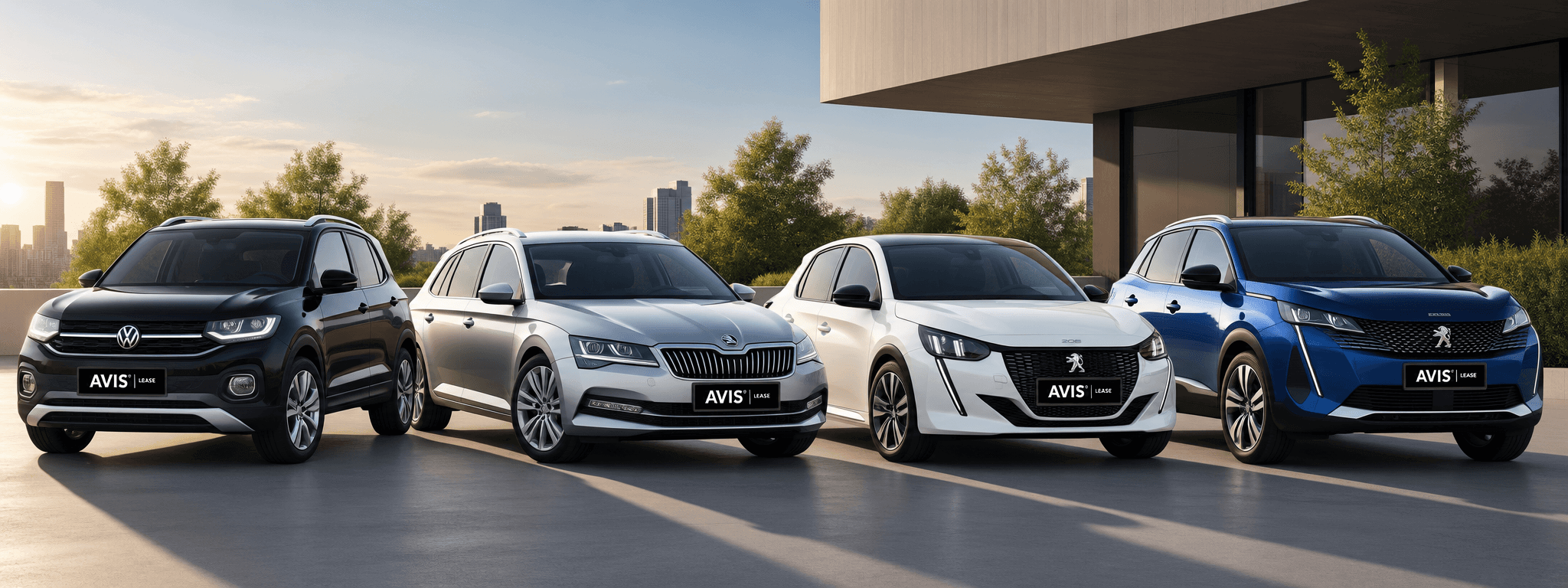
You need a car. You don’t need a big investment.
Mobility remains a necessity for companies, entrepreneurs, and households alike. However, the conditions under which customers access it have changed. New vehicles are more expensive, financing is more difficult to obtain, and in addition to the price of the car, the costs of service, replacement parts, insurance, and operation itself are also rising.
At the same time, a slowdown in inflation does not mean prices are falling. It simply means they are rising more slowly. As a result, customers are comparing options more carefully, keeping a closer eye on their monthly budgets, and are increasingly reluctant to tie up tens of thousands of euros of their own capital in a car.
For many, the main question is no longer “How much does this car cost?” but rather: “How much will it cost me per month, and how much do I have to pay up front?” The concept of a “second life” for vehicles responds precisely to this shift.
The need for mobility isn’t decreasing. What’s changing is how we finance it.
A customer may have a stable income and still run into the limits of traditional financing. A mortgage, consumer loan, credit card, or other obligations reduce their ability to take on additional debt. New and growing companies face a similar problem; they need cars for salespeople or employees but do not yet have a two- or three-year financial history.
Another barrier can be the down payment. A company or self-employed individual may have no trouble managing regular monthly payments but is unwilling or unable to come up with 5,000, 8,000, or 10,000 euros up front. They may need that capital for inventory, staff, technology, or further business development.
That’s why we don’t view a vehicle’s “second life” as a substitute for a new car at any cost. It’s another option for customers for whom the traditional model of ownership or financing doesn’t make economic sense at a particular moment.
What is a “vehicle’s second life”?
A vehicle completes its first operating lease—typically lasting several years—and, upon return, does not automatically have to be put up for sale. If it is technically suitable for continued operation, it can continue with another customer in a new rental or lease cycle.
The key difference from a random used car found in an ad is that we know this vehicle’s history. We know when it was first put into service, its mileage, service history, repairs, insurance claims, and technical condition.
A car at the end of its first lease is not at the end of its life. Often, it is just entering its most economically attractive phase.

Why might a second lease be more cost-effective?
Lower monthly payment: With a new vehicle, the most significant portion of its depreciation occurs in the first few years. For a vehicle after its first operating lease, a significant portion of this depreciation has already been absorbed during its first life cycle. This creates room for a more affordable monthly payment.
Lower entry barrier: Depending on specific terms and the customer’s creditworthiness,the product can be structured with a very low—or in some cases, even zero—initial fee. This means the customer does not have to tie up a large portion of their capital in the car.
Immediate availability: The vehicle already exists. Its condition is known, and there is no need to wait months for a new car to be manufactured. This can be crucial, especially for a company that needs immediate mobility for a new employee or a project.
Verified history: This is not an unknown used vehicle. We know its previous usage, service, and maintenance history, which allows us to better manage its remaining lifecycle.
Professional Risk Management: The customer isn’t buying a used car and then hoping to avoid unexpected repair costs. As part of the chosen product, they gain mobility with professional operational and risk management.
It’s Not “Second-Class Mobility”
A three- or four-year-old vehicle with a clear history can be a more economically sensible choice for many customers than a brand-new car. This isn’t a compromise at any cost, but a decision based on real needs, cash flow, and total mobility costs.
Today, customers are increasingly less likely to automatically seek out the newest vehicle. They’re looking for a solution that makes sense in terms of monthly costs, availability, flexibility, and risk.
Who is a vehicle’s “second life” suitable for?
Startups and growing companies: They need mobility now, not after two fiscal periods have closed. A vehicle can be a business tool necessary for winning contracts and further growth.
Small businesses and self-employed individuals: Cash flow is often more important than car ownership. Money that would otherwise go toward a down payment or the purchase of a vehicle can stay in the business.
Private customers: Households,too , are increasingly thinking about their regular monthly expenses and whether they really need to own a car.
Large corporate fleets: Not every job position requires a brand-new vehicle. A second life can make sense for pooled cars, project staff, temporary fleet expansions, or positions where functionality and cost are critical.
A vehicle’s second life isn’t just for people who can’t afford a new car. It’s for people or companies who know how to do the math.
You drive. We take care of everything else related to the car.
The vehicle itself is just one part of mobility. If a company buys and manages its own cars, it must handle their selection and purchase, financing, registration, insurance, maintenance, tires, claims, paperwork, replacement transportation, and—after a few years—their resale.
Each of these activities takes time, resources, and requires a certain level of expertise. Our solution, therefore, is to outsource mobility as a whole. The goal is not to sell the client a specific product at any cost. The goal is to tailor a solution based on what the client currently needs.
· a vehicle and its financing or leasing
· insurance and administrative services
· service and tires
· claims handling
· replacement vehicle
· further use or sale of the vehicle at the end of the cycle
Ideally, the client only has to worry about two things: driving and making the agreed-upon monthly payment.
One need does not mean one product
Mobility is shifting toward greater flexibility. One customer needs a new vehicle for several years. Another needs a car for just one year. Another needs to bridge a gap for a few months until their ordered vehicle arrives. And for some, a high-quality vehicle in its second life cycle makes the most sense.
Therefore, the result should not be a specific product at any cost. The result should be mobility tailored to the customer’s actual situation—their needs, budget, desired duration of use, and how they want to manage their capital.
The choice always remains with the customer. Our role is to create options, remove barriers, and enable them to choose the solution that makes the most sense for them at that moment.
A “second life” also means more efficient use of a car that has already been manufactured
Sustainability in the automotive industry isn’t just about the powertrain. It’s also about how effectively we use a product that has already been manufactured. If we have a high-quality vehicle with a complete service history that is technically capable of many more years of safe operation, its life cycle doesn’t have to end after its first owner.
By extending its use, we derive greater value from an asset that has already been produced. A vehicle’s second life thus combines economic rationality, more affordable mobility, and the principle of more efficient use of existing resources.
From the First Lease to the Entire Vehicle Lifecycle
For mobility providers, the perspective on the vehicle itself is also changing. Its economic life need not be limited to the purchase of a new car, a single four-year lease, and subsequent resale. It can continue with the first lease, a second lease cycle, and only then remarketing.
However, such a model will not depend solely on who has the most cars available. The deciding factor will be the ability to match the right vehicle with the right customer, with an appropriate monthly payment, contract term, and reasonable risk assessment.
Technology, automation, and, gradually, artificial intelligence can help providers process larger amounts of data and more accurately assess the needs and risk profile of a specific client. The goal is to offer a product that matches the customer’s actual situation, rather than forcing every customer into the same model.
The future of mobility will not belong to whoever has the most cars. It will belong to whoever can best combine the vehicle, data, risk, and the needs of a specific customer.
Give a car a second life. And put your capital to better use.
Are you looking for a vehicle for yourself, a new employee, a project, or an entire company fleet? Find out what operational leasing options and pre-owned vehicles in their second life cycle are currently available to you.
